
Table of Contents
- What Should Digital Marketing Services Include?
- SEO and Local SEO
- AEO, GEO, and AI Search Visibility
- Google Ads and PPC
- Social Media Marketing and Paid Social
- Content Marketing and Email
- Website Optimization and Conversion Rate
- How Should a Small Business Build Its Marketing Strategy?
- How Do State and City Searches Change the Plan?
- How Much Does Digital Marketing Cost?
- How Do You Choose the Right Marketing Agency?
- Frequently Asked Questions
- Are Online Marketing Services Worth It for a Small Business?
- How Long Do Digital Marketing Services Take to Show Results?
- Do I Need SEO and PPC at the Same Time?
- What Is the Difference Between a Marketing Agency and Digital Marketing Consulting?
- Can One Agency Manage Every Channel?
A business can have a steady stream of website visitors and still wonder where its next customer will come from. Effective digital marketing services connect the entire path: how the right people find you, what convinces them to get in touch, and which inquiries become paying customers. If you are comparing agencies, begin with the outcome you need qualified calls, booked appointments, online orders, or repeat purchases then ask which channels can produce and measure it.
A contractor, an online retailer, and a healthcare practice need different plans, even if all three want more leads. Here is how to compare channels and agencies.
What Should Digital Marketing Services Include?
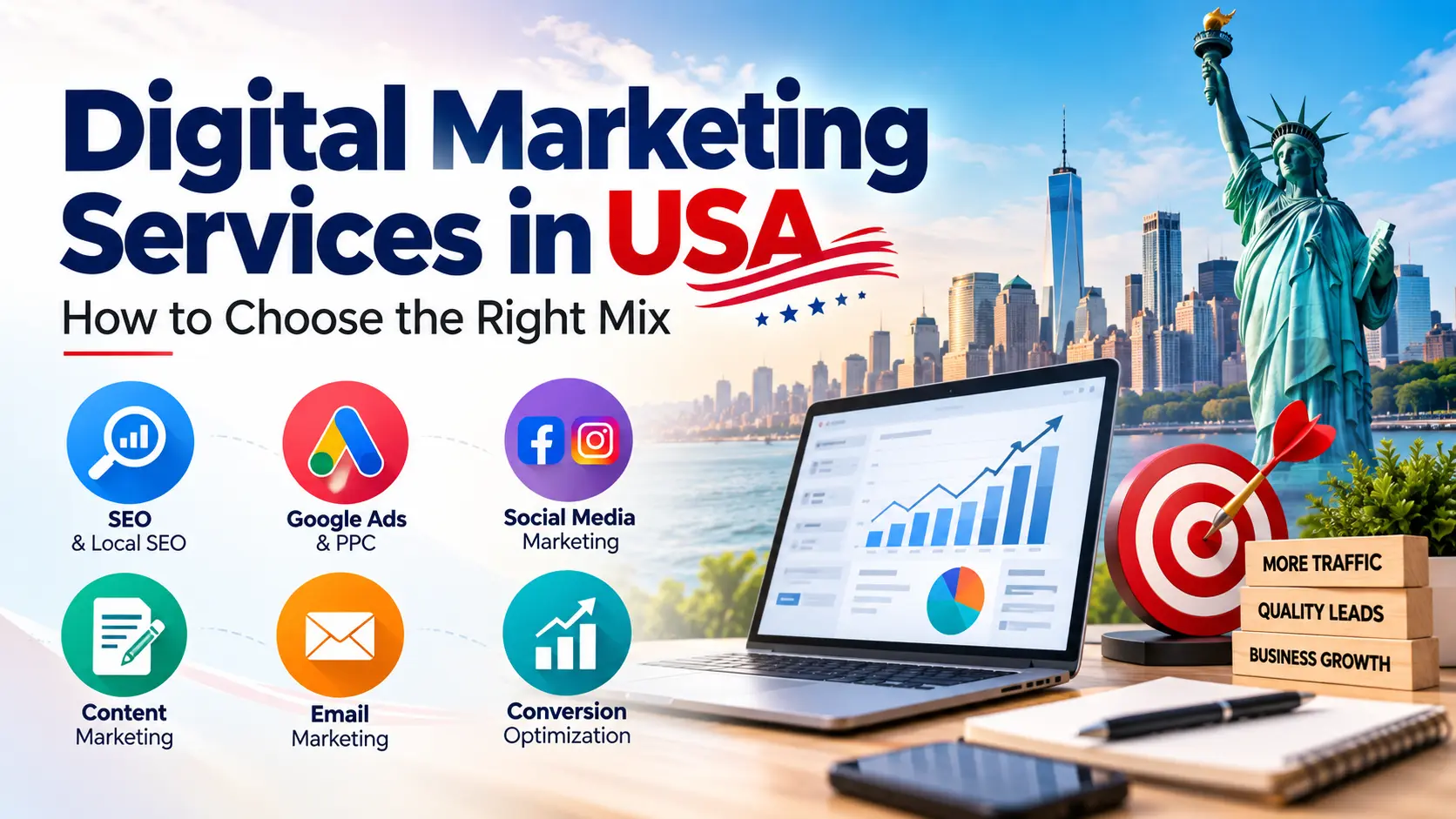
A useful plan begins with your audience, website, campaigns, sales process, and measurement setup. The agency should identify where prospects drop off and choose channels that match how they buy. The work may include SEO, paid advertising, content, social media, email, and conversion improvements. Buying every channel at once is rarely necessary.
Ask what the agency will deliver each month. “SEO” may mean an audit, ongoing work, or local search support. “Social media” may mean organic posts, paid campaigns, or both. Get the differences in writing.
SEO and Local SEO
SEO helps search engines understand your pages and helps people find answers and services relevant to their needs. The starting point is often technical access, page structure, useful content, internal links, and clear service information. Boost Coders describes its SEO services, including website evaluation, on-page work, technical SEO, and local search activity.
Local SEO adds geographic context. A service-area business needs accurate contact details, useful location pages, and consistent information across reputable listings. A Texas plumber should explain the areas actually covered rather than create dozens of near-identical city pages. Each office needs accurate details and a reason for its page to exist.
AEO, GEO, and AI Search Visibility
Answer engine optimization (AEO) focuses on giving direct answers to specific questions. Generative engine optimization (GEO), sometimes called AI SEO, addresses how a business is understood and referenced in AI search experiences. In practice, a useful page states what the service does, who it is for, where it is available, what it costs or what affects pricing, and how to take the next step. Original examples, clear authorship, accurate business details, and accessible page text give readers and search systems more to work with.
No shortcut guarantees an AI citation. Google says its core SEO practices still apply to generative search features. Ask an agency promising “AI rankings” which pages it would improve, what evidence it would add, and how it would assess results.
Google Ads and PPC
Google Ads can reach people already searching for a product or service. Pay-per-click (PPC) work should cover intent-based keyword groups, relevant ads, landing pages, location settings, negative keywords, and conversion tracking. Boost Coders has a page for Google Ads management that prospective clients can review when comparing scope.
A lead form submission is only the start. If few inquiries are suitable, review search terms, the offer, form questions, and follow-up. Connecting qualified leads and sales back to campaigns gives a clearer picture than click counts.
Social Media Marketing and Paid Social
Organic social media can show your work, answer common questions, and keep your business familiar to an existing audience. Paid social can introduce an offer to a defined group or bring previous visitors back to the site. Neither is automatically the right channel for every company. Boost Coders outlines its Meta Ads service for businesses considering Facebook and Instagram advertising.
Ask what will be created, who approves it, how messages are handled, and whether the goal is reach, inquiries, or sales. A clinic needs careful review; an ecommerce shop may need product images and a clear offer. Reports should connect activity to results.
Content Marketing and Email
Useful content answers questions people ask before they buy. A service page can explain the offer and the next step; a blog can compare options or explain a complicated decision. Boost Coders’ SEO content writing service is relevant when a business needs pages built around customer questions rather than a list of search phrases.
Email marketing serves people who have chosen to hear from you. Welcome messages, follow-ups, and customer updates can support repeat business. Ask how the agency obtains consent, segments the list, and measures results. Confirm whether email work is included in the proposal.
Website Optimization and Conversion Rate
Traffic has limited value if visitors cannot understand the offer or complete a form. Website optimization examines mobile speed, navigation, page clarity, trust information, accessibility, and the path to a call, booking, or purchase. Conversion rate optimization (CRO) tests changes against a goal, such as more qualified inquiries from the same traffic.
A campaign may send people to a broad homepage when they need one service. A clearer landing page and shorter form may help. If the site needs larger changes, ask whether custom web development belongs in scope. Measure results before and after changes.
How Should a Small Business Build Its Marketing Strategy?
Start with three questions: Who is the customer? What action matters to the business? How will you know that action came from marketing? Then choose a channel based on the buyer’s stage, rather than an agency’s favorite platform.
Business Need | Sensible Starting Point | Measure |
Customers are actively searching nearby | Local SEO and a clear service page | Qualified calls, bookings, and location inquiries |
Sales are needed while organic visibility grows | Search ads and a focused landing page | Cost per qualified lead and closed sales |
Buyers need education before deciding | Helpful service content, articles, and follow-up email | Engaged inquiries and sales conversations |
The business has an audience but few repeat purchases | Email and remarketing, where appropriate | Repeat orders and customer value |
Digital marketing services for small businesses work best when the website, campaigns, and sales team share the same definition of a good lead. If the goal is booked consultations, reporting only impressions and clicks hides the result that matters. Record how many inquiries are relevant, how quickly the team responds, and which ones turn into customers.
An affordable digital marketing agency should be willing to prioritize. A small budget spread across SEO, four social platforms, multiple ad networks, and weekly video production may leave every channel underfunded. A focused first phase can establish measurement, fix the main website obstacle, and test one or two promising ways to reach buyers. Expand when the evidence supports it.
How Do State and City Searches Change the Plan?
Someone searching for digital marketing services in Texas may run a Dallas-area practice, a Houston retailer, or a company selling statewide. Those are different markets. The plan should identify the actual service area, customer language, local competitors, and whether campaigns need city-level targeting or broader reach.
A search for digital marketing services in New York can also mean different things: a neighborhood business seeking local customers or a brand selling throughout the state. New York City competition and a smaller upstate market call for different budgets and page strategies. The agency should explain where it will target ads and which locations the website can truthfully serve.
Searches for digital marketing services in California, Florida, or Illinois also call for real local context. State names in headings alone do not create relevance. Useful location content reflects genuine coverage, services, contact paths, and customer needs. Boost Coders lists a Schaumburg, Illinois address; clients in other states should confirm meeting hours and campaign locations.
How Much Does Digital Marketing Cost?
The price depends on the work, market competition, number of locations, content needs, website condition, and ad budget. Compare proposals line by line instead of treating two monthly fees as equivalent. One may cover research and recommendations; another may include writing, page updates, campaign management, and reporting.
Ask the online marketing agency to separate setup fees, monthly management, advertising spend, content production, software, and website work. Also ask who owns the ad accounts, analytics, creative files, and published content. A lower fee can make sense for a narrow project, but only if it includes the work needed to meet your goal.
A proposal should state the first month’s work, recurring deliverables, approval process, and review dates. SEO and content need time to earn visibility; paid campaigns collect data sooner but still need testing. An agency cannot responsibly promise an exact ranking or return before reviewing your market and sales data.
How Do You Choose the Right Marketing Agency?
Searching for the “best digital marketing agency” or top digital marketing companies can build a shortlist. Ask each marketing company for relevant work, a sample report, who handles your account, and how it responds when a campaign underperforms.
Before signing, ask:
What is the first problem you would solve on our website or campaigns? A specific answer shows that the team reviewed your business.
Which services are included, and which are separate? Clarify SEO, paid ads, content, email, design, and development.
How do you define a qualified lead? Agree on the criteria with the sales team before reporting begins.
What access will our business retain? Keep ownership of the website, advertising and analytics accounts, and customer data.
How will you report progress? Expect business outcomes alongside channel metrics and a clear account of the work completed.
What happens if results fall short? Ask how the team investigates and changes its plan.
If you need a healthcare digital marketing agency, add questions about clinical review, patient privacy, advertising policies, and who approves medical claims. A small business marketing agency should likewise understand the owner’s limited time and give a realistic plan for approving content and following up with leads. Industry familiarity matters when it leads to better decisions, not just a logo on a portfolio page.
Frequently Asked Questions
Are Online Marketing Services Worth It for a Small Business?
They can be when the offer is clear, the sales process can handle new inquiries, and the work is measured against leads or sales. Start with the channel most closely tied to current customer demand. Fixing a confusing website may be more valuable than buying more traffic.
How Long Do Digital Marketing Services Take to Show Results?
Paid campaigns can generate visits soon after launch, but judging lead quality takes time and enough data. SEO and content usually build more gradually. Ask for a timeline of work and review points, then judge progress by relevant inquiries and sales outcomes rather than rankings alone.
Do I Need SEO and PPC at the Same Time?
Not always. PPC can test demand and bring near-term traffic while SEO improves the site’s ability to answer searches over time. The right mix depends on your budget, competition, website, and how quickly you need leads.
What Is the Difference Between a Marketing Agency and Digital Marketing Consulting?
A consultant may diagnose problems and guide your internal team. An agency may also carry out the work, such as writing pages or managing ads. Ask who will implement recommendations, who approves them, and what the monthly fee covers.
Can One Agency Manage Every Channel?
Some digital marketing companies offer several channels, but a broad menu does not prove equal depth in each. Ask for the people, process, and examples relevant to the services you will actually buy. If email or AI search support is important, request those deliverables in writing.
The next step is a brief built around your customer, offer, target locations, budget, and definition of a qualified lead. Use it to compare proposals on the same basis. To discuss SEO, advertising, content, or website needs, contact Boost Coders with those details and ask for a plan tied to measurable business outcomes.